Silk one way, cotton the other.
Chanderi is a town in Madhya Pradesh. The cloth takes its name from the town and is woven there, in houses, on looms set into the floor. People have been weaving it for about seven hundred years.
Where it starts
A worm, eating mulberry leaves.
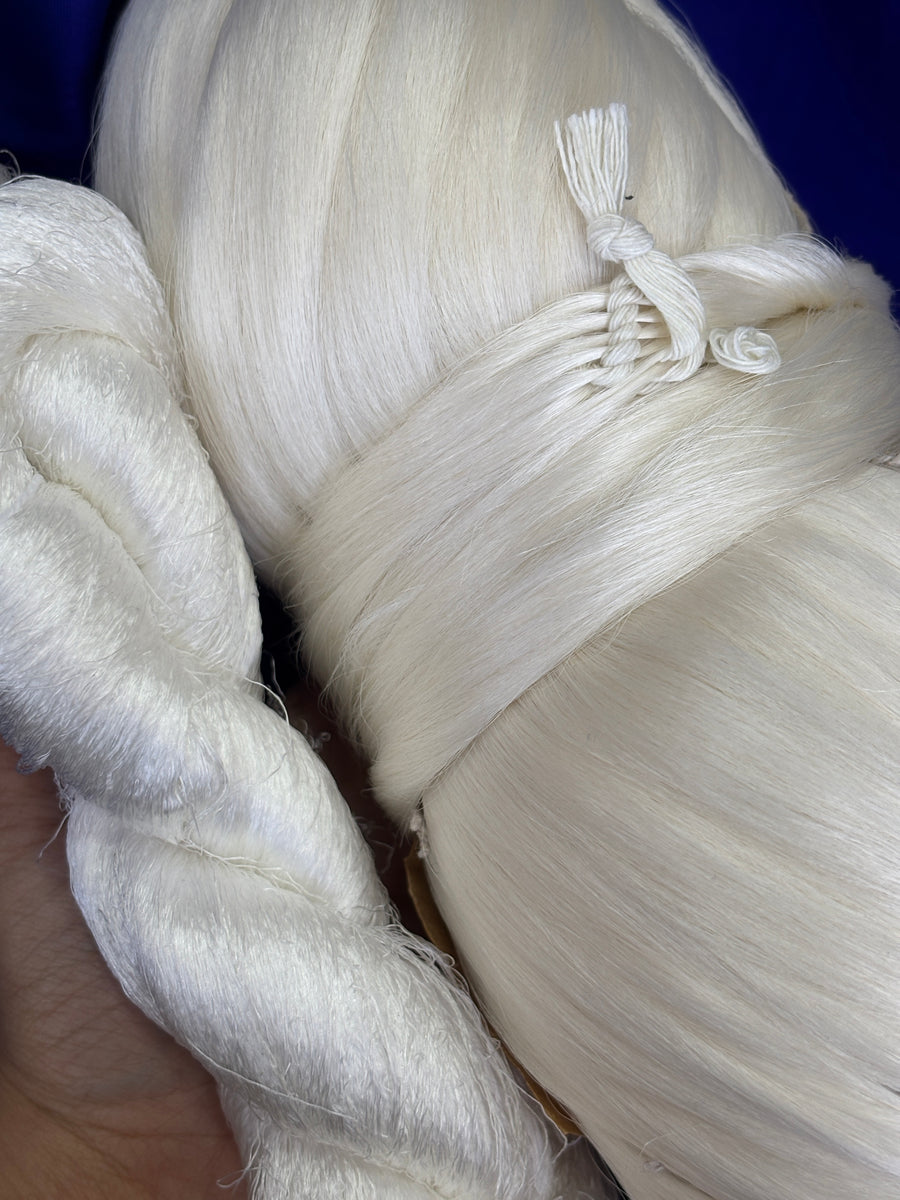
It eats for about a month, then spins a single unbroken filament around itself. That filament, unwound and washed, is the thread that runs the length of everything below.
Drag to open the weave
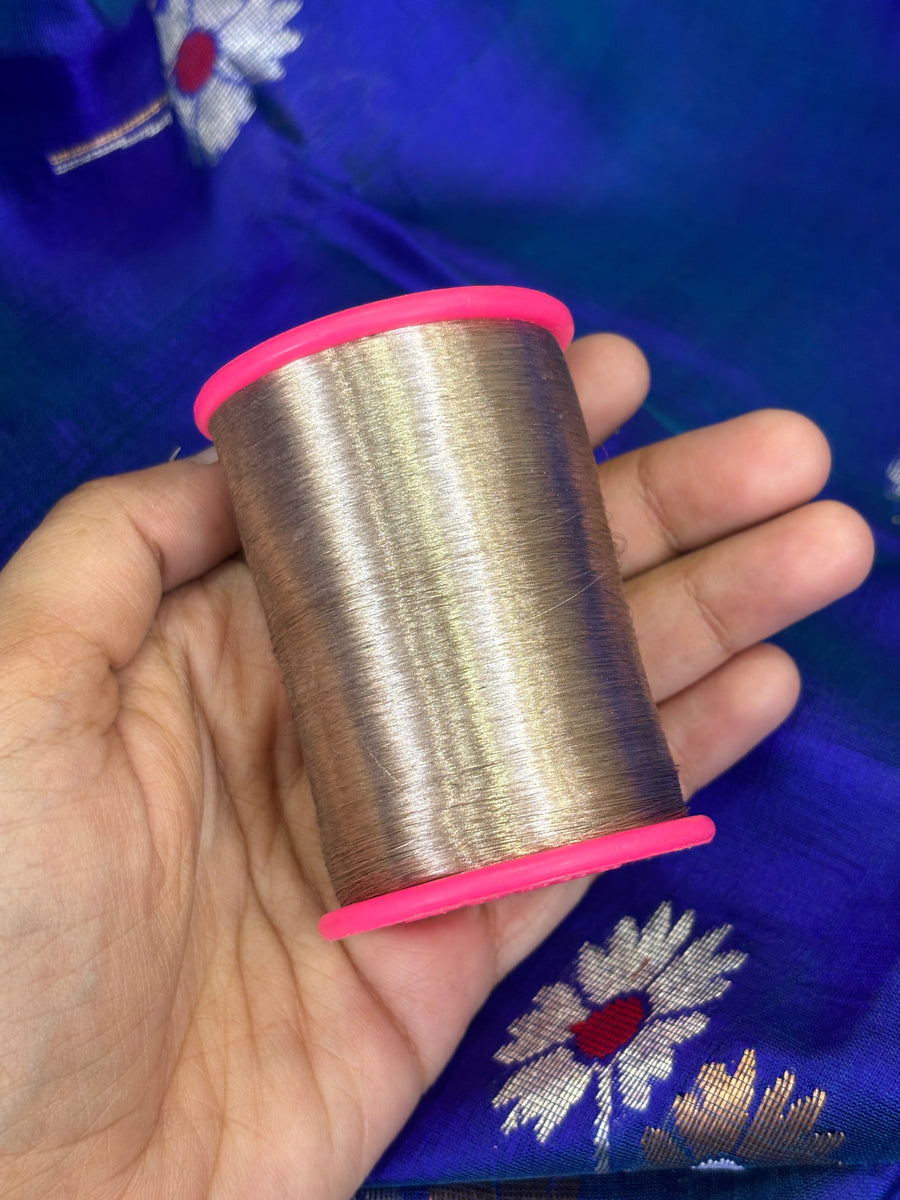
Silk runs the length. Cotton crosses it. Spun fine enough, the cotton opens the weave instead of filling it.
One dye bath
The two fibres drink colour at different rates. Nobody arranges this. It is what they do.
The gum is washed out first.
A silkworm spins a filament and a gum that glues it together. Raw silk still has the gum on it — stiff, slightly dull, and it takes dye unevenly. Washed out in warm water, what is left is soft, even, and holds a straight line under tension. That is where the shine comes from.
The pattern is woven in, not printed on.
Each figure is put in by hand with its own small spool, in the middle of the weaving, one row at a time. Turn the piece over and you will see the threads carried across the back. A printed cloth has a front and a wrong side. This one has two honest sides.
Nothing is added to fake a hand.
Much cloth is finished with chemicals that make it feel expensive in a shop and ordinary after two washes. What you feel here is the weave. It will not get worse.
The loom sits in the house.
Husband and wife work it together through the day, changing places at the same loom. She winds the thread, sets up the next run of pattern, and takes her turn weaving. Neither of them is the assistant.
Seven hundred years, roughly
The town sits where the trade routes between Gujarat, Mewar and the Deccan cross.The weaving tradition takes the shape it still has. Within a century it is being woven for royal households.A Mughal workshop is set up in the town. A length of Chanderi is said to have reached Akbar inside a hollow bamboo stick, and unrolled large enough to cover an elephant.Weavers try Japanese silk in place of cotton for the long threads. That experiment is the cloth we use now.Chanderi is given a protected origin mark, the fourth in India. Cloth woven elsewhere cannot be sold under the name.About 3,600 looms still run in the town, worked by around 11,000 people. A small number, for something this old.Watch one piece get made.
The Making